How to Choose the Best Acoustic Glass for Secondary Glazing (Compared)
4mm, 6mm, 6.4mm laminate or 6.4mm acoustic laminate? We break down decibels, PVB interlayers and air gaps to help you pick the right glass for genuine London-grade soundproofing.
By Penny Hargreaves, Heritage Acoustics Writer••Updated •5 min read
If you live in a bustling part of London, your home is likely subject to a rhythmic cocktail of sirens, rumbling buses, and the general hum of city life. For many of our clients, the custodians of beautiful listed buildings and period homes, these windows are a primary source of frustration. Standard single glazing acts like a drum skin, vibrating with every passing vehicle and transmitting that energy directly into your living room.
You’re likely here because you’ve decided that shivering in a woolly jumper or sleeping with earplugs isn’t a long-term solution. You need a “secret weapon” to reclaim your peace. Secondary glazing is that solution, but the real magic lies in the glass you choose.
In this guide, we’ll break down the technical jargon of decibels and interlayers to help you choose the best acoustic glass for your property.
The Physics of Peace: Why Thickness Matters
When it comes to blocking sound, mass is your best friend. A thicker pane of glass is harder for sound waves to push around, meaning less vibration and less noise in your ear. However, simply choosing the thickest glass isn’t always the “surgical strike” approach we recommend.
To understand how we silence the street, we need to look at the Sound Reduction Index (Rw). This is a decibel (dB) measurement of how much sound the glass can stop. A 10dB reduction is often perceived by the human ear as a 50% reduction in noise.
The Contenders: 4mm, 6mm, and 6.4mm
We often get asked if the difference between 4mm and 6.4mm glass is actually noticeable. The short answer is yes: but the science is in the details.
1. The Entry Point: 4mm Toughened Glass
Standard secondary glazing usually starts with 4mm glass. If you are moving from a single-pane window with gaps, even this “entry-level” option will feel like a revelation. It’s excellent for thermal efficiency but is the lightweight of the acoustic world.
Best for: Quieter side streets or where thermal insulation is the priority over heavy soundproofing.
2. The Mid-Range: 6mm Toughened Glass
Stepping up to 6mm glass adds significant mass without a huge jump in cost. In a standard secondary glazing installation, 6mm glass can offer an additional 1–3 dB of reduction over 4mm. While that sounds small, in the world of acoustics, every decibel is a hard-won victory.
3. The Security Specialist: 6.4mm Laminated Glass
Standard 6.4mm laminated glass consists of two layers of 3mm glass “sandwiched” together with a thin plastic interlayer. While it’s slightly better for sound than 6mm glass, its primary job is security. If the glass breaks, the interlayer holds the shards in place.
For expert secondary glazing advice and free consultations for listed buildings in London, contact Secondary Glazing Specialist on 020 7060 1572.
Acoustic Science5 min readEst. £5,000 – £20,000+
How to Choose the Best Acoustic Glass for Secondary Glazing (Compared)
P
Penny Hargreaves
Heritage Acoustics Writer
If you live in a bustling part of London, your home is likely subject to a rhythmic cocktail of sirens, rumbling buses, and the general hum of city life. For many of our clients, the custodians of beautiful listed buildings and period homes, these windows are a primary source of frustration. Standard single glazing acts like a drum skin, vibrating with every passing vehicle and transmitting that energy directly into your living room.
You’re likely here because you’ve decided that shivering in a woolly jumper or sleeping with earplugs isn’t a long-term solution. You need a “secret weapon” to reclaim your peace. Secondary glazing is that solution, but the real magic lies in the glass you choose.
In this guide, we’ll break down the technical jargon of decibels and interlayers to help you choose the best acoustic glass for your property.
The Physics of Peace: Why Thickness Matters
When it comes to blocking sound, mass is your best friend. A thicker pane of glass is harder for sound waves to push around, meaning less vibration and less noise in your ear. However, simply choosing the thickest glass isn’t always the “surgical strike” approach we recommend.
To understand how we silence the street, we need to look at the Sound Reduction Index (Rw). This is a decibel (dB) measurement of how much sound the glass can stop. A 10dB reduction is often perceived by the human ear as a 50% reduction in noise.
The Contenders: 4mm, 6mm, and 6.4mm
We often get asked if the difference between 4mm and 6.4mm glass is actually noticeable. The short answer is yes: but the science is in the details.
1. The Entry Point: 4mm Toughened Glass
Standard secondary glazing usually starts with 4mm glass. If you are moving from a single-pane window with gaps, even this “entry-level” option will feel like a revelation. It’s excellent for thermal efficiency but is the lightweight of the acoustic world.
Best for: Quieter side streets or where thermal insulation is the priority over heavy soundproofing.
2. The Mid-Range: 6mm Toughened Glass
Stepping up to 6mm glass adds significant mass without a huge jump in cost. In a standard secondary glazing installation, 6mm glass can offer an additional 1–3 dB of reduction over 4mm. While that sounds small, in the world of acoustics, every decibel is a hard-won victory.
3. The Security Specialist: 6.4mm Laminated Glass
Standard 6.4mm laminated glass consists of two layers of 3mm glass “sandwiched” together with a thin plastic interlayer. While it’s slightly better for sound than 6mm glass, its primary job is security. If the glass breaks, the interlayer holds the shards in place.
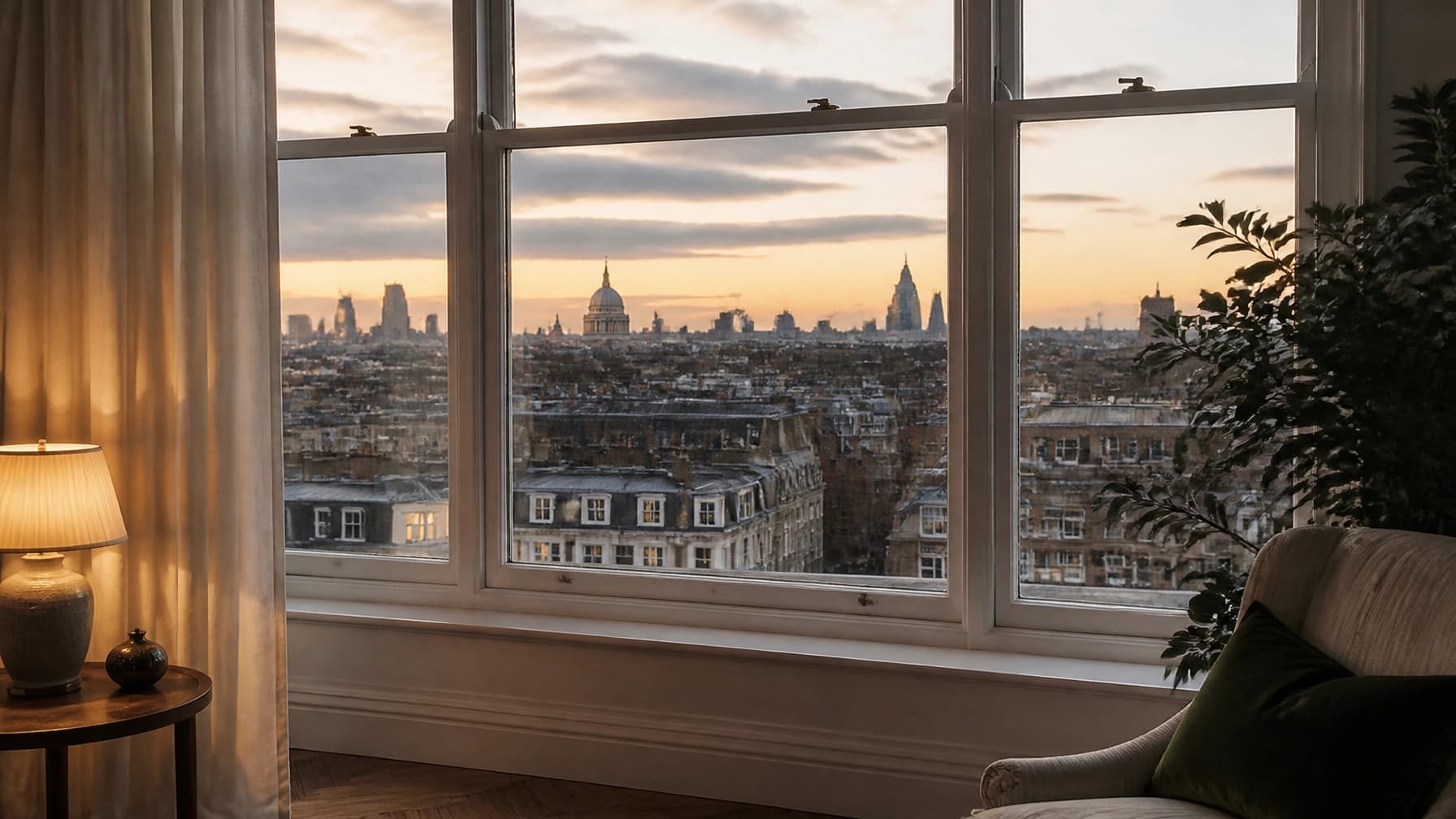
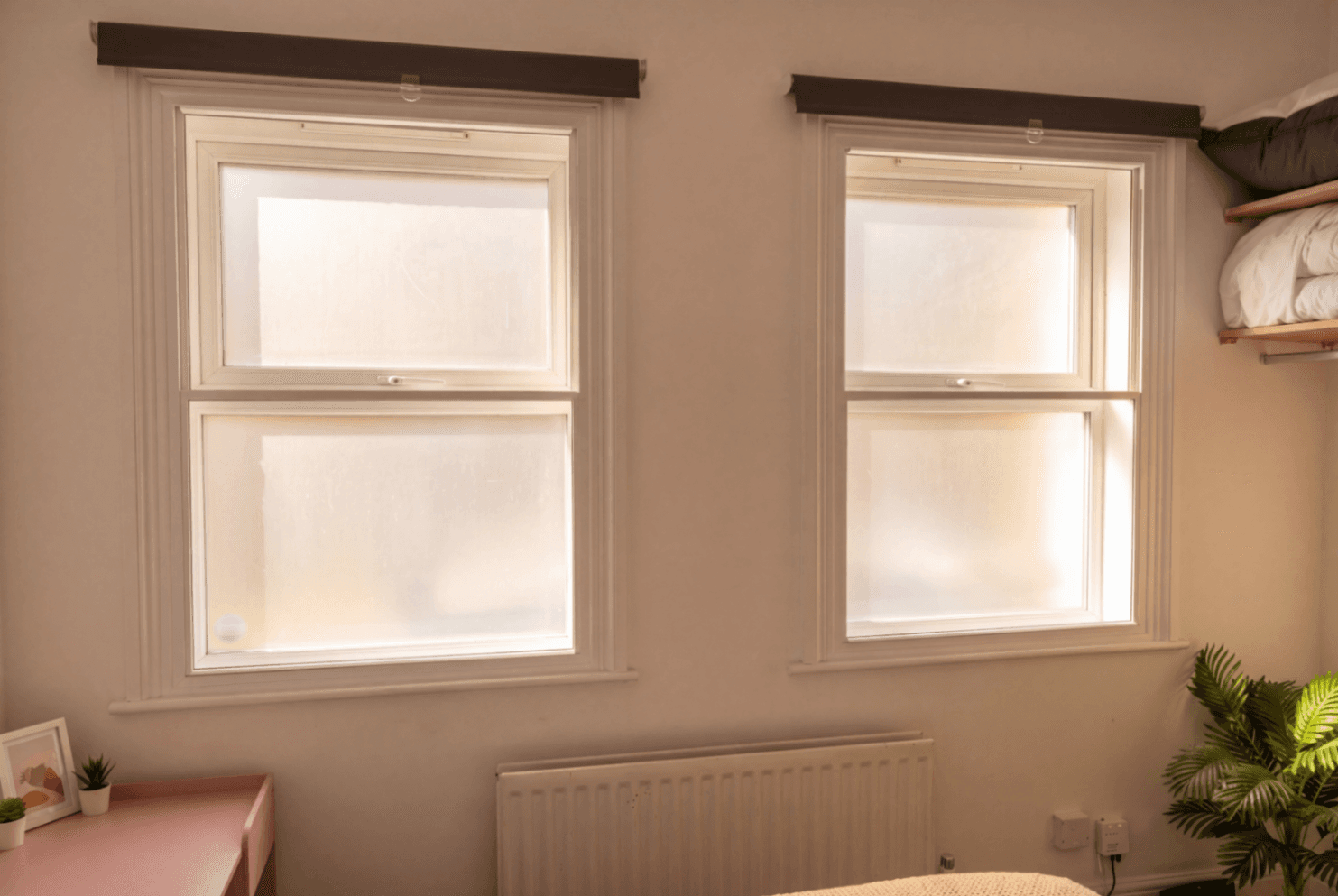
The right glass turns a street-facing sash window into a genuinely quiet space.
The “Secret Weapon”: 6.4mm Acoustic Laminated Glass
If you are serious about silence, this is the gold standard. 6.4mm Acoustic Laminated glass (often referred to by brand names like Stadip Silence) looks identical to standard laminated glass, but it hides a sophisticated PVB (Polyvinyl Butyral) interlayer.
This interlayer isn’t just glue; it’s a specially formulated acoustic dampener. It changes the way the glass vibrates, specifically targeting the “coincidence frequency”: the point where standard glass becomes virtually transparent to sound.
How it works: Think of a bell. If you hit a standard glass pane, it “rings.” Acoustic laminate acts like putting your hand on that bell; it deadens the vibration instantly.
The Result: You can achieve a reduction of up to 51–53 dB when paired with a generous air gap.
Acoustic Glass Comparison Table
To simplify your choice, we’ve put together this comparison based on typical performance in a secondary glazing system with a 100mm–150mm air gap.
Glass Type
Thickness
Relative Noise Reduction
Best Suited For…
Standard Float/Toughened
4mm
★★★☆☆ (approx. 38-40 dB)
Thermal improvement & light noise
Standard Float/Toughened
6mm
★★★★☆ (approx. 39-41 dB)
Balanced performance & value
Standard Laminated
6.4mm
★★★★☆ (approx. 40-42 dB)
Safety, security, and decent acoustics
Acoustic Laminated
6.4mm
★★★★★ (up to 53 dB)
Maximum soundproofing (A-roads, trains)
Note: These figures represent the combined performance of your existing window plus the secondary unit. For a deeper dive, see our comprehensive soundproofing guide.
The Crucial Variable: The Air Gap
We like to be honest with our clients: even the most expensive acoustic glass will fail if the installation is poor. The “loophole” in achieving recording-studio levels of silence is the air gap.
For maximum noise reduction, we aim for a cavity of 100mm to 150mm between your original window and the secondary pane. If the gap is too small (less than 50mm), the two panes can actually couple together and vibrate in unison, acting like a single pane and letting the noise straight through. This is the principle behind all of our noise reduction glazing.
A generous 100–150mm air gap is as important as the glass itself.
Is It Worth the Upgrade?
If your property is a listed building, you likely cannot change your original windows. This makes secondary glazing your only viable path to comfort.
Our advice is usually this:
If you’re on a quiet residential road, 6mm toughened is the “sweet spot” for value and performance.
If you’re near a bus stop, a train line, or a late-night venue, 6.4mm acoustic laminate is an investment in your mental health and property value. It is a “bespoke” upgrade that provides aesthetic longevity and genuine peace.
However, we must be transparent: if your existing window frames are rotting or structurally unsound, no amount of acoustic glass will save them. Secondary glazing is a surgical strike for sound and heat, but it requires a solid foundation to work its magic.
Reclaim Your Sanctuary
Choosing the right glass is about more than just numbers on a datasheet; it’s about being able to hear yourself think. Whether you need the discreet protection of 4mm glass or the heavy-duty silence of 6.4mm acoustic laminate, we are here to help you navigate the options.
Ready to protect your home from the noise of the outside world?Get an instant quote or speak with one of our specialists today.
The everyday payoff: a quiet London street, viewed from a calm interior.
Sources & References
The information in this article is supported by the following sources. We strive to provide accurate, well-researched content for our readers.
1
Standard
BS EN ISO 717-1 Acoustics — Rating of sound insulation in buildings. British Standards Institution (2020).
London's leading secondary glazing specialists for Grade I, Grade II, and Conservation Area properties. Every project begins with a complimentary heritage survey.