Secondary Glazing Cost & Prices2026 Price Guide
Secondary glazing typically costs between £300 and £2,200 per window depending on the glass specification. This guide breaks down the price per window and for a whole home, and explains exactly what drives the cost.
Prices last reviewed
Cost Per Window
The single biggest factor in your quote is the glass specification. Here is what to budget per window in 2026:
| Specification | Price per window | Best for |
|---|---|---|
| Standard (4mm float glass) | £300 – £800 | Thermal comfort and light noise reduction |
| Acoustic (10.8mm laminate) | £600 – £1,200 | Homes near traffic, railways or flight paths |
| Heritage grid-matched | £1,000 – £2,200 | Listed buildings and period sash windows |
How to Read These Price Ranges
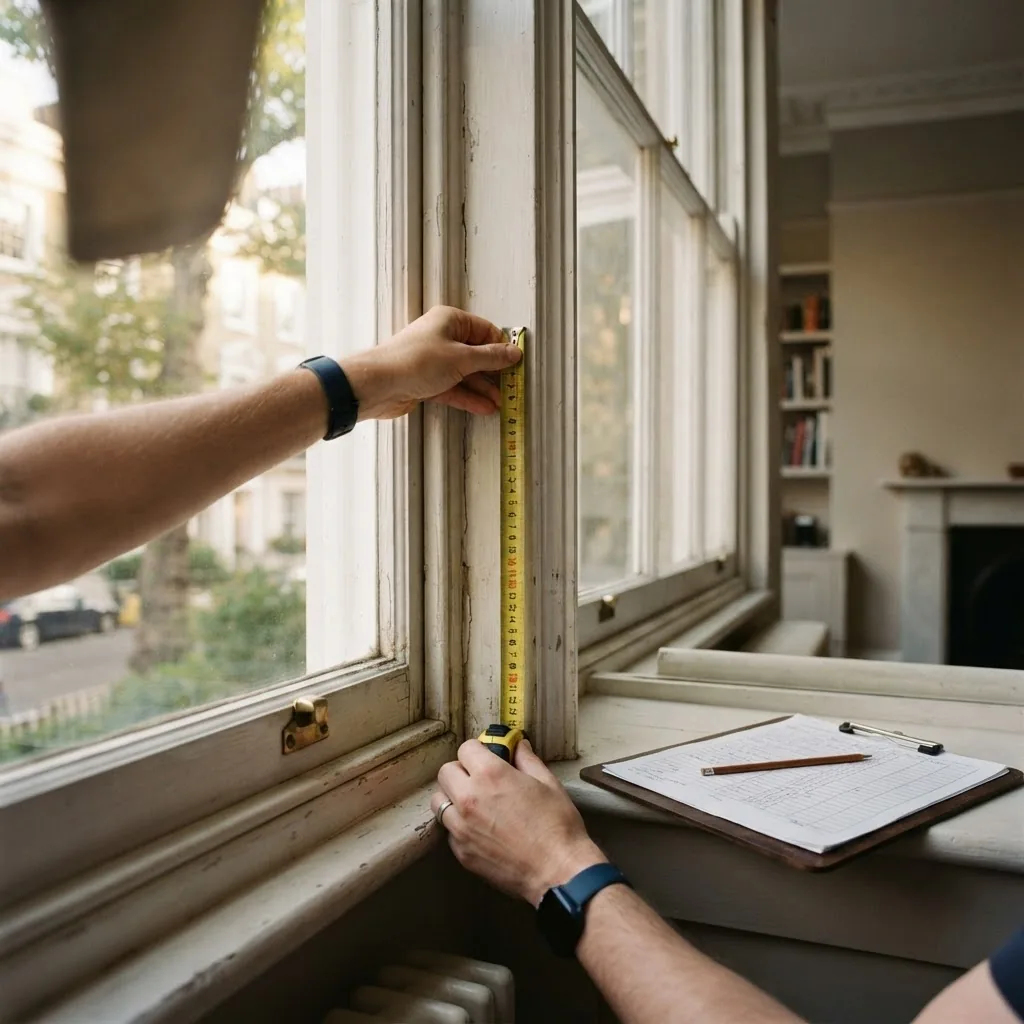
Each range covers the full job for one window: the survey, a made-to-measure frame and glass, fitting, sealing and removing all packaging. The bottom of each range is a small, fixed or simple sliding unit in a square reveal. The top is a large window with a hinged or sliding mechanism, a deep or out-of-square reveal, or awkward access.
The bands overlap because size and specification interact. A large standard window can cost more than a small acoustic one. So use the glass specification to find the right band, then use the window size to place yourself within it.
When you compare quotes from different companies, check whether VAT, making good and any parking or access charges are included. Also check that the glass is named in writing (for example "10.8mm acoustic laminate", not just "acoustic glass"). Two quotes that look different are often for different specifications.
Example Prices by Window Type
These are typical guide prices for the windows we survey most often in London homes. They assume a standard white frame and reasonable access. Heritage grid-matching is priced separately.
| Window type | Usual unit | Standard glass | Acoustic glass |
|---|---|---|---|
| Small casement or landing windowUp to 0.6m × 0.9mCheapest window to treat. Fine as a fixed panel where you never need to open it. | Fixed or lift-out panel | £300 – £450 | £600 – £750 |
| Standard Victorian sashAround 0.9m × 1.6mThe most common London window. Meeting rail is aligned with the original sash. | Vertical slider | £450 – £700 | £750 – £1,050 |
| Tall Georgian sash (first floor)1.0m × 2.2m or largerLarger panes and heavier glass. Add £400–£1,000 if grid bars must match the original sash. | Vertical slider | £650 – £800 | £950 – £1,200 |
| Three-sided bayThree openingsPriced as three windows. Corner posts and splayed reveals add fitting time. | Three linked sliders | £1,300 – £2,100 per bay | £2,000 – £3,300 per bay |
| Steel or Crittall-style casementVariesHinged units match how the original steel window opens and keep it accessible. | Hinged casement | £400 – £750 | £700 – £1,100 |
| Wide picture or studio window1.8m wide or moreOver about 2.5m wide it is usually split into several panels, which raises the price. | Horizontal slider | £650 – £800 | £900 – £1,200 |
Guide prices only. Your fixed quote follows a free survey.
Whole-Home Cost
Most homeowners glaze several windows at once. As a guide, here is what a typical project costs by property type:
| Property | Typical windows | Estimated range |
|---|---|---|
| Studio / 1-bed flat | 4 – 6 windows | £2,500 – £6,000 |
| 2 – 3 bed flat or maisonette | 6 – 10 windows | £5,000 – £12,000 |
| Period townhouse | 12 – 20+ windows | £12,000 – £30,000 |
What Changes a Quote?
Two windows that look the same from the street can be priced very differently. These are the factors our surveyors check, roughly in order of how much they move the price:
- Glass specification. This is the biggest single driver. 4mm float glass is the base price, 6.4mm laminate adds safety and a little noise reduction, and 10.8mm acoustic laminate roughly doubles the glass cost because it is heavier and has an acoustic interlayer. Low-E coated glass for thermal performance sits between the two.
- Window size. Glass is priced by area, and larger panes need heavier frame sections and more handling on site. A tall Georgian sash can cost half as much again as a standard Victorian sash with the same glass. Bay windows are priced as several separate units.
- Opening style. Fixed and lift-out panels are cheapest. Vertical and horizontal sliders and hinged casements cost more for the running gear and seals. See our guide to secondary glazing types to match the unit to how you use the window.
- Reveal depth and sub-frames. A deep reveal gives room for a wide acoustic air gap at no extra cost. A shallow reveal, or one that is out of square, may need a timber sub-frame built out into the room, which adds material and fitting time.
- Heritage detailing. Grid bars matched to original sashes, colour-matched frames and the drawings needed for listed buildings add cost. Most of this is labour and extra survey time, not materials.
- Frame finish. Standard white or off-white frames are included. A bespoke RAL colour or wood-effect finish is usually a small surcharge per window, and it is cheaper per window across a larger order.
- Access and London logistics. Upper-floor flats without a lift, restricted parking, Congestion Charge and ULEZ zones, and managing agents who require method statements all add time. They are itemised on the quote rather than hidden in the window price.
- Number of windows. Survey, setting-out and travel are fixed costs for each visit, so the price per window falls as the order grows. A single window costs noticeably more per unit than the same window in a whole-house order.
For a listed home, our complete guide to secondary glazing for listed buildings explains what the consent process involves and when it applies.
How to Reduce the Cost
- Prioritise rooms. Treat bedrooms and the main living room first, then add quieter rooms in a second phase.
- Mix specifications. Put acoustic laminate on street-facing windows and standard glass on the garden side, where noise is not the problem.
- Match the opening style to use. A landing window that never opens can take a fixed or lift-out panel rather than a slider.
- Be wary of DIY. Kits are cheaper upfront, but poor seals lose much of the acoustic and thermal benefit. Our DIY vs professional comparison sets out the trade-off.
Some energy-efficiency schemes can also offset part of the cost. We keep a running list in our 2026 window grants and schemes guide.
How It Compares to Replacement Windows
The headline figures are only half the story. Replacing a single timber sash window with a heritage-appropriate double-glazed equivalent typically runs into several thousand pounds per window once you account for manufacture, removal, making good the surrounding plaster and redecoration. Secondary glazing sits well below that because the original window stays exactly where it is — there is no rip-out, no structural work and no redecorating bill afterwards.
For a whole period property the gap widens considerably, and in a listed building or conservation area replacement is often refused outright, which makes the comparison academic. You should also factor in the cost of not acting: a leaky single-glazed window keeps inflating your heating bills every winter and lets condensation attack the original timber, and timber repairs are far more expensive than prevention.
Is It Worth the Investment?
Because secondary glazing cuts heat loss through the window by more than 60%, most homeowners see a meaningful reduction in their heating costs, and the benefit compounds every year that energy prices rise. The returns that clients tell us matter most, though, are the ones that do not appear on a bill: sleeping through the night on a main road, using a cold bay window in January, and no longer wiping condensation off the glass each morning.
We would rather be straight with you than oversell it. If your primary frames are already rotten or structurally unsound, secondary glazing will not fix that underlying decay — the timber needs restoring first, or you are simply glazing over a problem. Equally, if you own an unlisted property outside a conservation area and have no objection to modern replacement windows, that may be the better long-term route. But if you want to keep original windows that cannot or should not be replaced, this is the most cost-effective upgrade available. Every quote is fixed, itemised and follows a free no-obligation survey, so there are no surprises.
Read how long a system lasts in our lifespan and maintenance guide, find out whether it is worth it, or return to our complete guide to secondary glazing.
Secondary Glazing Cost: Frequently Asked Questions
Common questions about secondary glazing prices, what's included, and how to get an accurate quote.
Get an Accurate, Itemised Quote
Price guides are a starting point — the only way to know your exact cost is a free survey. We measure every window and give you a clear, no-obligation breakdown.
From the Journal
Value, Grants and Payback
Reading on the financial side of secondary glazing: what affects lifespan, which grants London homeowners can access, and how the numbers compare with replacement.
- Technical GuideHow Long Does Secondary Glazing Last? Lifespan and MaintenanceHow long secondary glazing lasts, what affects its lifespan, and the simple maintenance that keeps it performing for decades.7 min read
- Technical GuideWindow Grants and Schemes 2026: What London Homeowners Can ClaimA complete guide to grants, schemes, and financial support for window improvements in 2026, including the Warm Homes Plan and local authority funding.10 min read
- Technical GuideSecondary or Double Glazing? A Building Physicist's Verdict on Noise and HeatA comprehensive comparison of secondary glazing and double glazing for noise reduction, thermal performance, cost, and suitability for different property types.12 min read
- Technical GuideDIY Secondary Glazing vs Professional Installation: What's the Difference?Comparing DIY secondary glazing kits with professional installation. When to save money doing it yourself, and when to call in the experts.8 min read