The Ultimate Guide to Secondary Glazing for Listed Buildings
James Whitfield
Conservation Planning Advisor
As the custodian of a listed building, you’re in a rather particular position. You’re not just a homeowner. You’re looking after a slice of history, holding together architectural character that may have stood for centuries. The thing is, that privilege often comes with a very chilly downside.
You know the feeling: the rhythmic cocktail of sirens and traffic noise slipping through single-pane glass, the rattle of a sash window in a gale, and that unmistakable winter cold that has you reaching for a woolly jumper before you’ve even finished your morning tea. You want comfort. You want efficiency. But the rules can make it feel as though every sensible upgrade is tied up in red tape.
Traditional double glazing is almost always a “non-starter” for listed properties. It is invasive, permanent, and—in the eyes of most conservation officers—an unforgivable alteration to a building’s historic fabric.
But there is a bit of an insider’s loophole. A “secret weapon”, if you like. Something that can deliver modern performance while staying virtually invisible from the street. Welcome to the definitive guide to secondary glazing for listed buildings.
The Listed Building Dilemma: Why You’re Stuck with Single Panes
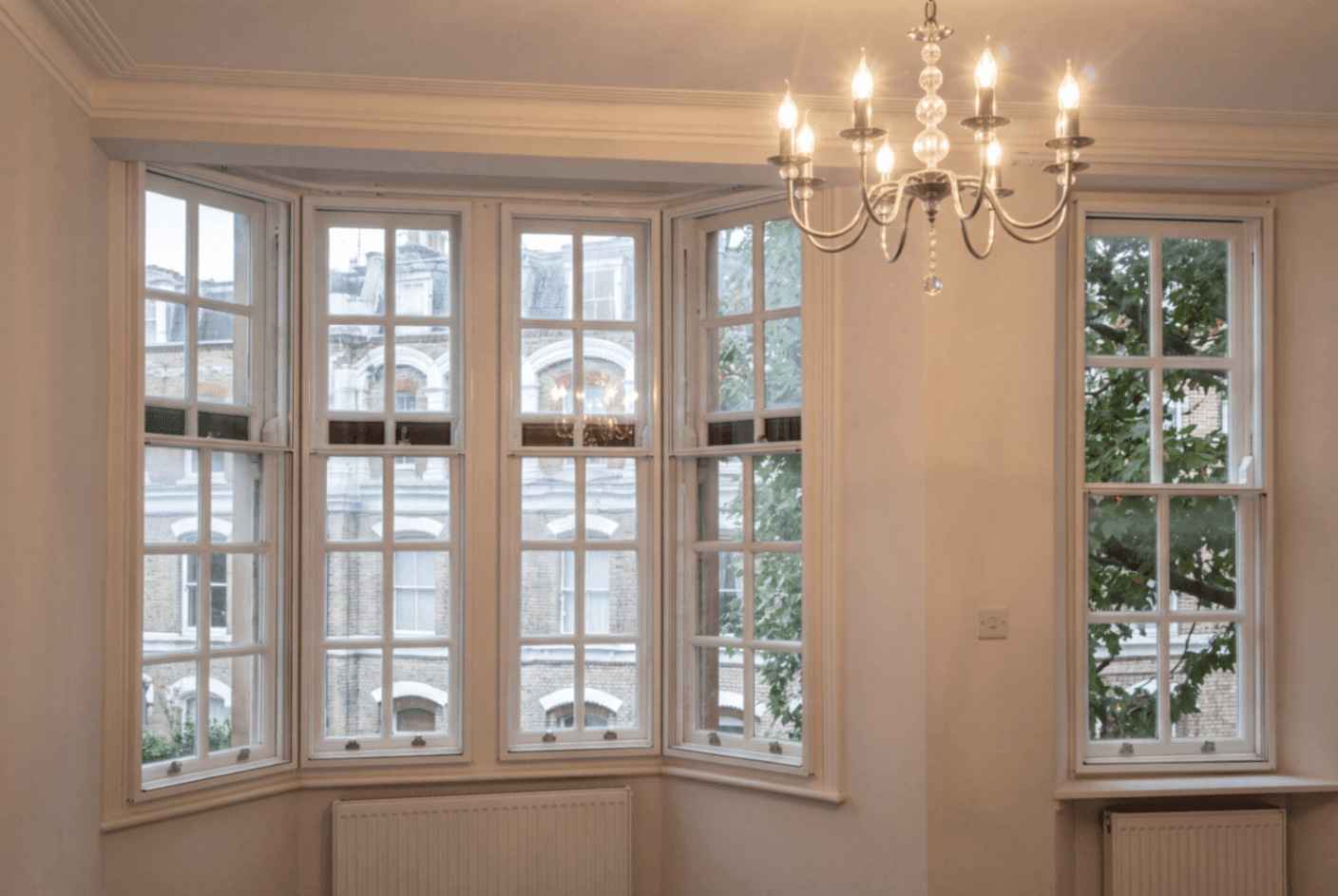
If you’ve ever tried to apply for replacement windows in a Grade II or Grade I property, you’ll know it can feel like navigating a minefield. The main sticking point is “historic fabric.” Original timber sashes and hand-blown cylinder glass are often treated as essential parts of the building’s character.
Take them out and replace them with double-glazed units, and many conservation officers will see that as a real loss of architectural integrity. Even if you could make double glazing fit, the added thickness usually means chunkier frames, which can spoil those delicate sightlines that give an old property its charm.
That’s where secondary glazing earns its keep. Unlike replacement windows, secondary glazing is a fully reversible, internal installation. It sits behind your existing windows, acting like a high-performance second skin without asking you to sacrifice the original features. For the planning-permission angle in particular, see our companion piece on the listed building loophole.
The Science of Silence: Turning Your Windows into an Acoustic Shield
Think of your current single-pane windows as a drum skin. When sound waves hit the glass, they make it vibrate, sending noise straight into your living room. Whether it’s the hum of traffic or the roar from a flight path, thin glass just doesn’t stand much of a chance.
By installing a bespoke secondary unit with a significant air gap (usually 100mm to 150mm), you interrupt that vibration. We often use acoustic laminate glass with a PVB interlayer—a specialist material designed to absorb sound energy rather than pass it along.
The result? A reduction in noise of up to 80% (approx. 50dB). In plain English, that can mean the difference between hearing every conversation on the pavement and finally getting the quiet your home should have given you all along. We dig into the specification in our guide to 10.8mm acoustic laminate glass.

The Thermal Envelope: Plugging the “Colander”
Many heritage homeowners describe their heat loss as “pouring money out of the window.” Thermally speaking, an old sash window can behave like a colander holding water. Draughts whistle through the gaps. Heat slips through the thin glass. Meanwhile, your boiler keeps slogging away.
Secondary glazing creates a thermal envelope. Add a second layer of glass—especially high-performance Low-E glass—and you can dramatically improve the U-value of your windows, which is simply the measure of heat loss.
- Single Glazing U-value: Approx. 5.8
- Secondary Glazing U-value: Can be reduced to as low as 1.8 or 1.9
That doesn’t just mean a warmer house. It can also mean lower bills and a smaller carbon footprint. Pro tip: if you suspect draughts but cannot quite pinpoint them, carefully move a candle near the window edges on a still day. If the flame flickers, air is getting in. Just keep well clear of curtains and always put safety first.
It’s a practical way to bring 21st-century efficiency into an older home without disturbing its 18th-century character.
Navigating the Red Tape: Do You Need Permission?
This is the most common question we receive from listed building owners. We still recommend a quick call to your local planning authority, but there is some genuinely encouraging news here.
Historic England’s stance is clear: They generally encourage the use of secondary glazing because it is “reversible.” If a future owner 100 years from now wanted to remove it, the original window would remain completely untouched underneath.
- Planning Permission: Generally not required. Because the work is internal and does not alter the external appearance, it is not considered “development.”
- Listed Building Consent (LBC): Often not required, provided the installation is “discreet” and does not damage historic features like internal shutters or ornate architraves. The thing is, in some jurisdictions (or for Grade I properties), a simple notification or light-touch application may still be necessary.
We act as your “Conservation Planning Advisor” during this process, making sure our designs are a “surgical strike”—minimizing fixings and using slimline profiles that blend neatly into your window reveals.

The Struggle with Condensation
If you are tired of mopping up puddles on your mahogany sills every morning, you aren’t alone. Condensation is the quiet enemy of historic timber, and left unchecked, it can lead to rot and costly repairs.
When warm, moist air inside your home hits the ice-cold glass of a single pane, it turns to water. Secondary glazing helps by keeping the inner pane of glass much warmer. Plus, when it is paired with balanced ventilation, it can virtually eliminate condensation issues, protecting your historic fabric from the inside out.
Is It Truly Worth the Investment?
We believe in transparency. If your window frames are currently rotting or structurally unsound, secondary glazing isn’t a magic wand—the underlying timber needs to be healthy first.
That said, for a property with sound but inefficient windows, the ROI is hard to ignore. Beyond the energy savings, you are improving the “liveability” and value of your home. A quiet, warm bedroom is one of those comforts that quickly stops feeling like a luxury and starts feeling essential. You can read more in our detailed analysis: Is Secondary Glazing Worth It?

The Secondary Glazing Specialist Approach: Bespoke & Discreet
At Secondary Glazing Specialist, we don’t believe in “one size fits all.” Every listed building has its quirks—wonky frames, settled lintels, and unique mouldings.
Our process is focused on aesthetic longevity:
- Bespoke Design: We match our frames to your existing sightlines. If you have a heritage bay window, our units will align perfectly with the meeting rails of your sashes. Explore the different types of secondary glazing we offer.
- Minimal Disruption: Most installations are completed in a single day, with no need for scaffolding or major construction.
- Premium Materials: We use slimline aluminium frames that can be powder-coated to any RAL colour, ensuring they disappear into the background.
What Living with Your Home Could Feel Like Again
You shouldn’t have to choose between the historic charm of your home and the basic human need for warmth and quiet. Secondary glazing for listed buildings is the bridge between the past and the present.
Imagine the same beautiful windows, the same character, the same sense of history, but without the constant draught on your neck or the street noise intruding on every quiet moment. That is really what this is about.
It is time to stop shivering and start enjoying your property the way it was meant to be experienced.
Ready to reclaim your home? Request a bespoke quote today and let us help you find the perfect, discreet solution for your listed property.
Sources & References
The information in this article is supported by the following sources. We strive to provide accurate, well-researched content for our readers.
- 1Government
Energy Efficiency and Historic Buildings: Secondary Glazing for Windows. Historic England (2016).
- 2Government
Traditional Windows: Their Care, Repair and Upgrading. Historic England (2017).
- 3Standard
BS 8233:2014 Guidance on sound insulation and noise reduction for buildings. British Standards Institution (2014).