Home Music Studio Windows: Soundproofing for Musicians
Dr Sarah Chen
Building Physics Consultant

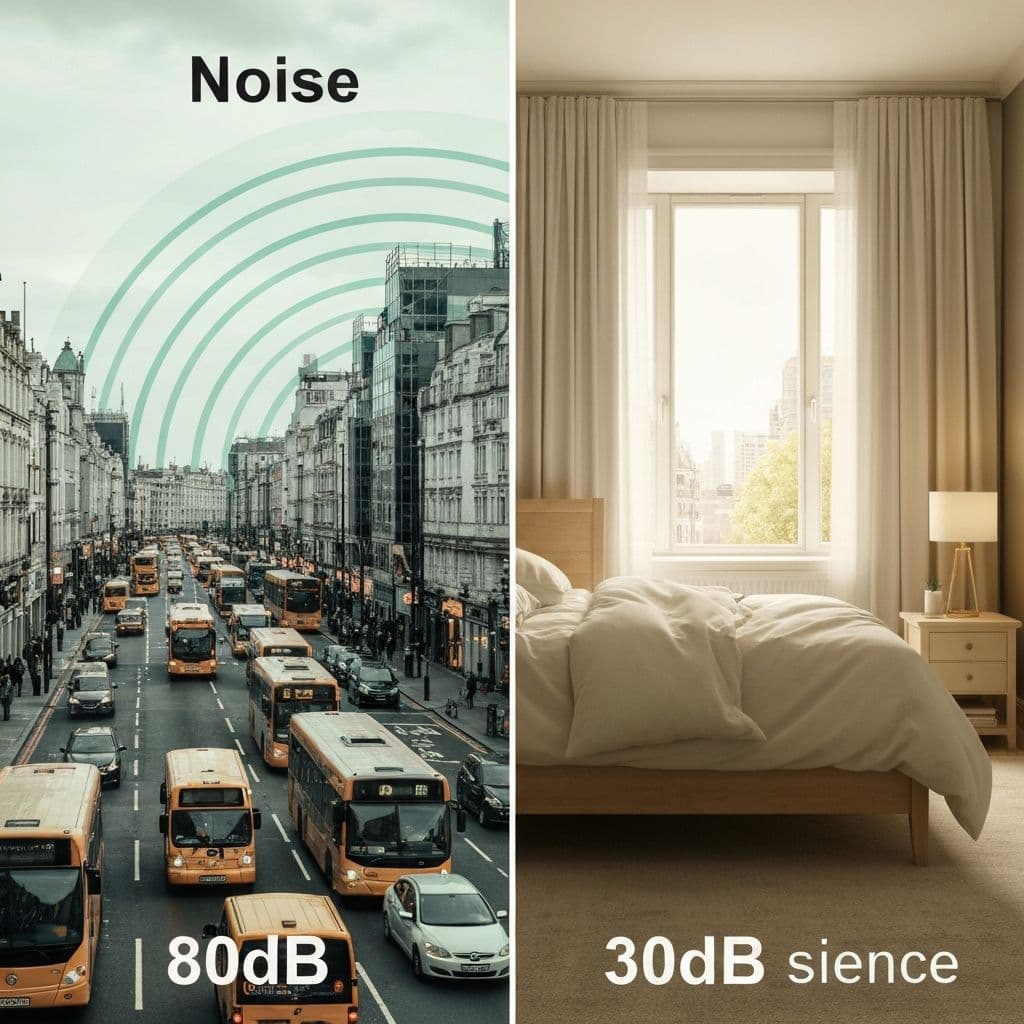
For musicians, the home studio dream often collides with urban reality. You need to keep external noise out of your recordings, but you also need to prevent your music from disturbing neighbours. It's a two-way acoustic challenge—and windows are typically the weak link in both directions.
The Two-Way Problem
Noise Coming In
External sounds ruin recordings:
- Traffic rumble beneath a delicate vocal take
- Sirens cutting through an acoustic guitar track
- Aircraft drowning out a crucial mixing decision
- Neighbour noise bleeding into sensitive microphone recordings
Sound Going Out
Your music disturbs others:
- Bass frequencies travelling through the building
- Drum practice audible streets away
- Late-night sessions irritating neighbours
- Amplified instruments penetrating party walls
Sound insulation works both ways. Improving your windows helps with both problems simultaneously.
Studio-Grade Window Specification
For serious music production, specify:
Glass
10.8mm acoustic laminate minimum, with acoustic PVB interlayer. For critical listening environments, consider asymmetric configurations (different glass thicknesses) to avoid resonance effects.
Air Gap
150-200mm where possible. Larger gaps provide better low-frequency isolation—essential for bass-heavy music production and drum recording.
Sealing
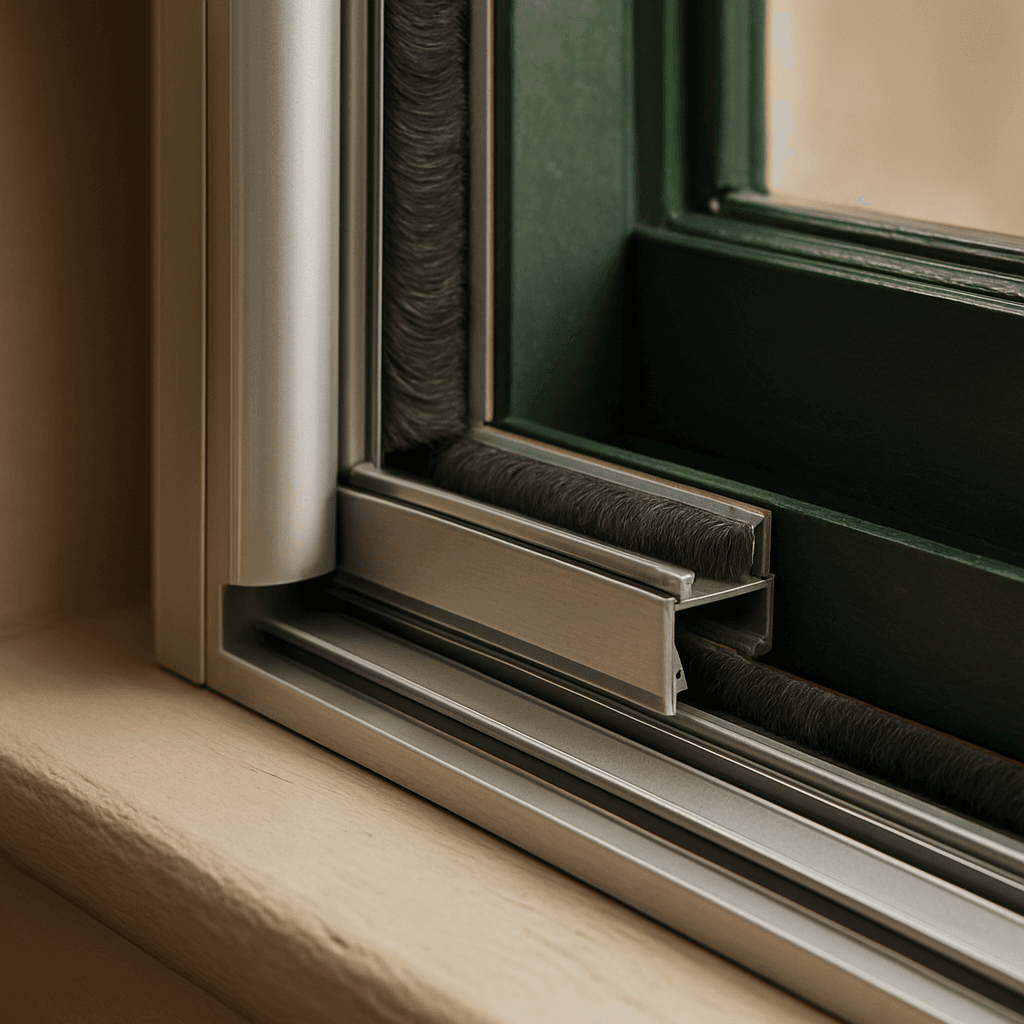
Studio applications demand exceptional sealing. Even small gaps allow sound flanking that microphones will detect. We use compression seals, acoustic mastic, and multiple seal lines.
Frame Mass
Heavy-duty aluminium frames add mass and rigidity. For studios, we sometimes recommend steel subframes for maximum isolation.
Performance Expectations
With premium studio specification:
| Frequency Range | Typical Reduction | Practical Meaning |
|---|---|---|
| Low bass (63Hz) | 30-40dB | Kick drums, bass guitars significantly attenuated |
| Mid bass (125Hz) | 40-48dB | Bass presence reduced to background |
| Low mid (250Hz) | 45-52dB | Guitar fundamentals very quiet |
| Mid (500Hz-2kHz) | 48-55dB | Vocals, instruments barely perceptible |
| High (4kHz+) | 50-58dB | Cymbals, high frequencies effectively blocked |
A 50dB reduction means music at 90dB in your studio reaches neighbours at around 40dB—quiet conversation level.
Windows as Part of Studio Design
Professional studios treat windows as one element of a comprehensive acoustic design:
The Weak Link Principle
Overall isolation is limited by the weakest element. There's no point achieving 60dB through windows if sound travels freely through walls, floor, or ceiling.
Prioritisation
For home studios, typical priority order:
- Windows (often worst performers, most cost-effective to improve)
- Doors (seal properly or replace with acoustic doors)
- Walls (address only if party walls or lightweight construction)
- Floor (important if neighbours below; less critical for ground floor)
- Ceiling (mainly relevant for structure-borne sound)
Realistic Goals
A fully isolated professional studio room might achieve 70-80dB reduction. A well-treated home studio can realistically achieve 45-55dB—enough for recording and mixing at reasonable hours without neighbour complaints.
Recording Quality Benefits
Beyond keeping sound in, reducing external noise dramatically improves recording quality:
- Cleaner vocal tracks: No background rumble to filter out later
- Better dynamic range: Quiet passages stay quiet
- Improved mic technique: Can use more sensitive settings without picking up external noise
- Accurate monitoring: Mix decisions based on your music, not obscured by environmental sound
What About Ventilation?
Studios need fresh air but can't have open windows. Solutions include:
Sealed Operation
Keep secondary glazing closed during recording. Ventilate between sessions by opening both layers.
Acoustic Ventilation
Specialised ventilators with sound-attenuating baffles allow airflow with minimal noise penalty. Add 5-8dB to background noise but essential for extended sessions.
Mechanical Ventilation
HVAC systems provide fresh air without any window opening. The professional solution for serious studios.
Installation Considerations
Existing Room Treatment
If you've already invested in room treatment (acoustic panels, bass traps), secondary glazing complements rather than replaces this work. Treatment addresses internal acoustics; glazing addresses isolation. Our acoustic secondary glazing page explains the isolation side in more detail.
Window Positioning
If converting a room to studio use, consider which windows are essential. Blocking a window entirely (with proper insulated construction) provides better isolation than any glazing—though at the cost of natural light.
Aesthetics
Studios often have minimalist, functional aesthetics. Secondary glazing can be specified with slim profiles and neutral colours that complement professional studio design.
Costs for Music Applications
Studio-grade window treatment typically runs:
- Single window, premium spec: £1,500-£2,500
- Small studio (2-3 windows): £3,000-£6,000
- Larger studio: £6,000-£10,000+
This represents a fraction of the cost of full room isolation (which can run £20,000-£50,000+) while addressing the most common weak point.
Planning and Neighbours
Before establishing a home studio:
- Check lease terms regarding noise and music
- Consider pre-emptive neighbour conversations
- Establish reasonable hours for louder work
- Document your soundproofing efforts in case of complaints
Investing in soundproofing demonstrates good faith and usually resolves potential issues before they become problems.
Getting Started
Whether you're setting up a professional home studio or just want to practise without disturbing neighbours, request a survey to discuss your acoustic requirements.
Call 020 7060 1572 to talk through your music studio project with a specialist.