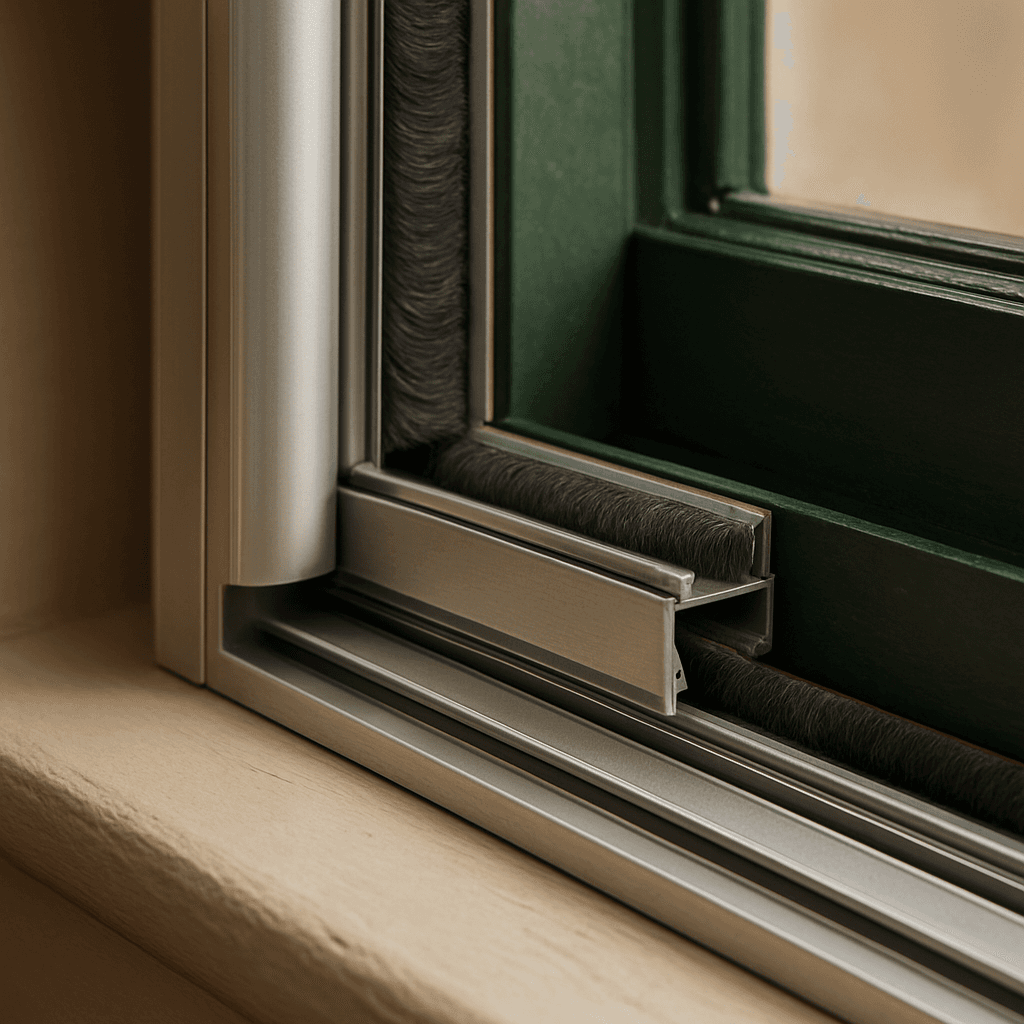
What Thickness of Acoustic Glass Do You Need for Secondary Glazing?
Penny Hargreaves
Heritage Acoustics Writer
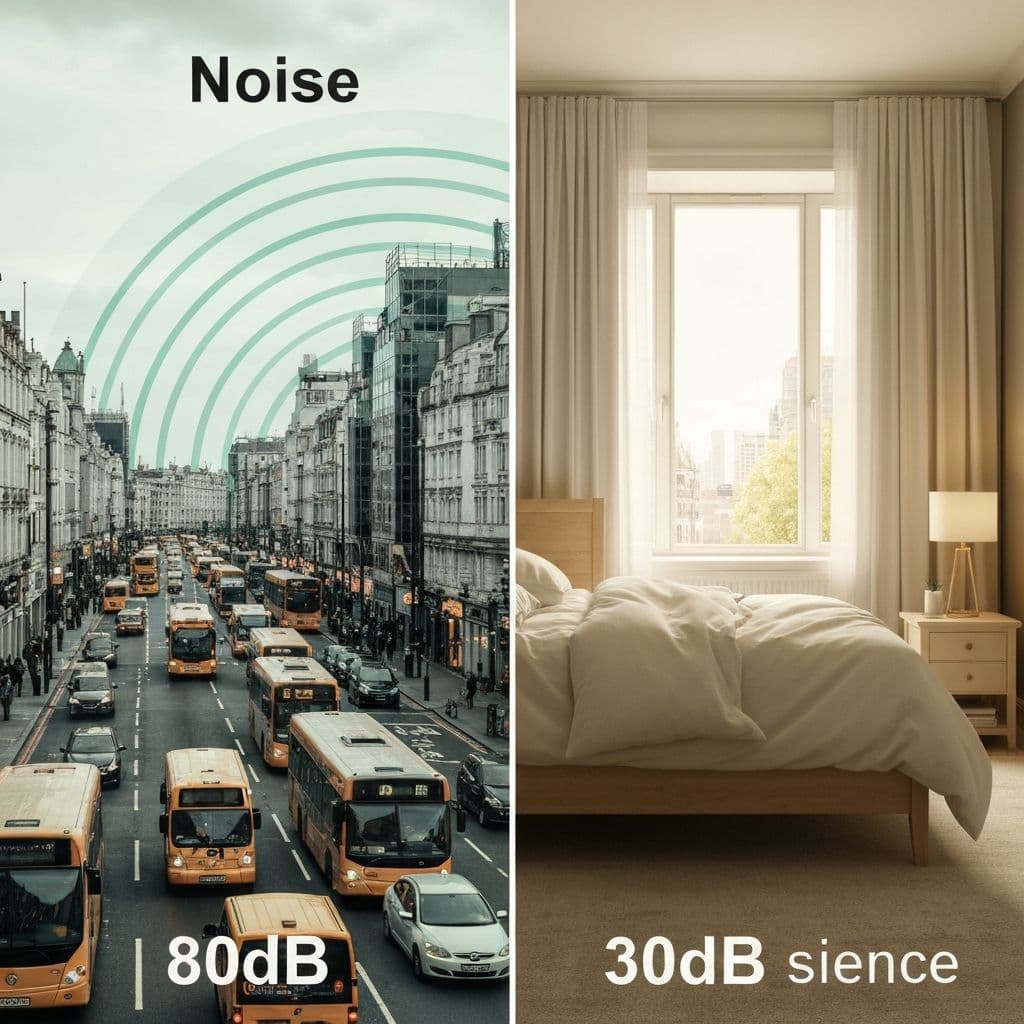
If you live in a bustling part of London, your home is likely subject to a rhythmic cocktail of sirens, rumbling buses, and the general hum of city life. For many of our clients, the custodians of beautiful listed buildings and period homes, these windows are a primary source of frustration. Standard single glazing acts like a drum skin, vibrating with every passing vehicle and transmitting that energy directly into your living room.
You’re likely here because you’ve decided that shivering in a woolly jumper or sleeping with earplugs isn’t a long-term solution. You need a “secret weapon” to reclaim your peace. Secondary glazing is that solution, but the real magic lies in the glass you choose.
In this guide, we’ll break down the technical jargon of decibels and interlayers to help you choose the best acoustic glass for your property.
The Physics of Peace: Why Thickness Matters
When it comes to blocking sound, mass is your best friend. A thicker pane of glass is harder for sound waves to push around, meaning less vibration and less noise in your ear. However, simply choosing the thickest glass isn’t always the “surgical strike” approach we recommend.
To understand how we silence the street, we need to look at the Sound Reduction Index (Rw). This is a decibel (dB) measurement of how much sound the glass can stop. A 10dB reduction is often perceived by the human ear as a 50% reduction in noise.
The Contenders: 4mm, 6mm, and 6.4mm
We often get asked if the difference between 4mm and 6.4mm glass is actually noticeable. The short answer is yes: but the science is in the details.
1. The Entry Point: 4mm Toughened Glass
Standard secondary glazing usually starts with 4mm glass. If you are moving from a single-pane window with gaps, even this “entry-level” option will feel like a revelation. It’s excellent for thermal efficiency but is the lightweight of the acoustic world.
- Best for: Quieter side streets or where thermal insulation is the priority over heavy soundproofing.
2. The Mid-Range: 6mm Toughened Glass
Stepping up to 6mm glass adds significant mass without a huge jump in cost. In a standard secondary glazing installation, 6mm glass can offer an additional 1–3 dB of reduction over 4mm. While that sounds small, in the world of acoustics, every decibel is a hard-won victory.
3. The Security Specialist: 6.4mm Laminated Glass
Standard 6.4mm laminated glass consists of two layers of 3mm glass “sandwiched” together with a thin plastic interlayer. While it’s slightly better for sound than 6mm glass, its primary job is security. If the glass breaks, the interlayer holds the shards in place.

The “Secret Weapon”: 6.4mm Acoustic Laminated Glass
If you are serious about silence, this is the gold standard. 6.4mm Acoustic Laminated glass (often referred to by brand names like Stadip Silence) looks identical to standard laminated glass, but it hides a sophisticated PVB (Polyvinyl Butyral) interlayer.
This interlayer isn’t just glue; it’s a specially formulated acoustic dampener. It changes the way the glass vibrates, specifically targeting the “coincidence frequency”: the point where standard glass becomes virtually transparent to sound.
- How it works: Think of a bell. If you hit a standard glass pane, it “rings.” Acoustic laminate acts like putting your hand on that bell; it deadens the vibration instantly.
- The Result: You can achieve a reduction of up to 51–53 dB when paired with a generous air gap.
Acoustic Glass Comparison Table
To simplify your choice, we’ve put together this comparison based on typical performance in a secondary glazing system with a 100mm–150mm air gap.
| Glass Type | Thickness | Relative Noise Reduction | Best Suited For… |
|---|---|---|---|
| Standard Float/Toughened | 4mm | ★★★☆☆ (approx. 38-40 dB) | Thermal improvement & light noise |
| Standard Float/Toughened | 6mm | ★★★★☆ (approx. 39-41 dB) | Balanced performance & value |
| Standard Laminated | 6.4mm | ★★★★☆ (approx. 40-42 dB) | Safety, security, and decent acoustics |
| Acoustic Laminated | 6.4mm | ★★★★★ (up to 53 dB) | Maximum soundproofing (A-roads, trains) |
Note: These figures represent the combined performance of your existing window plus the secondary unit. For a deeper dive, see our comprehensive soundproofing guide.
The Crucial Variable: The Air Gap
We like to be honest with our clients: even the most expensive acoustic glass will fail if the installation is poor. The “loophole” in achieving recording-studio levels of silence is the air gap.
For maximum noise reduction, we aim for a cavity of 100mm to 150mm between your original window and the secondary pane. If the gap is too small (less than 50mm), the two panes can actually couple together and vibrate in unison, acting like a single pane and letting the noise straight through. This is the principle behind all of our noise reduction glazing. For a deeper look at cavity depth, see how far apart secondary glazing should be.

Is It Worth the Upgrade?
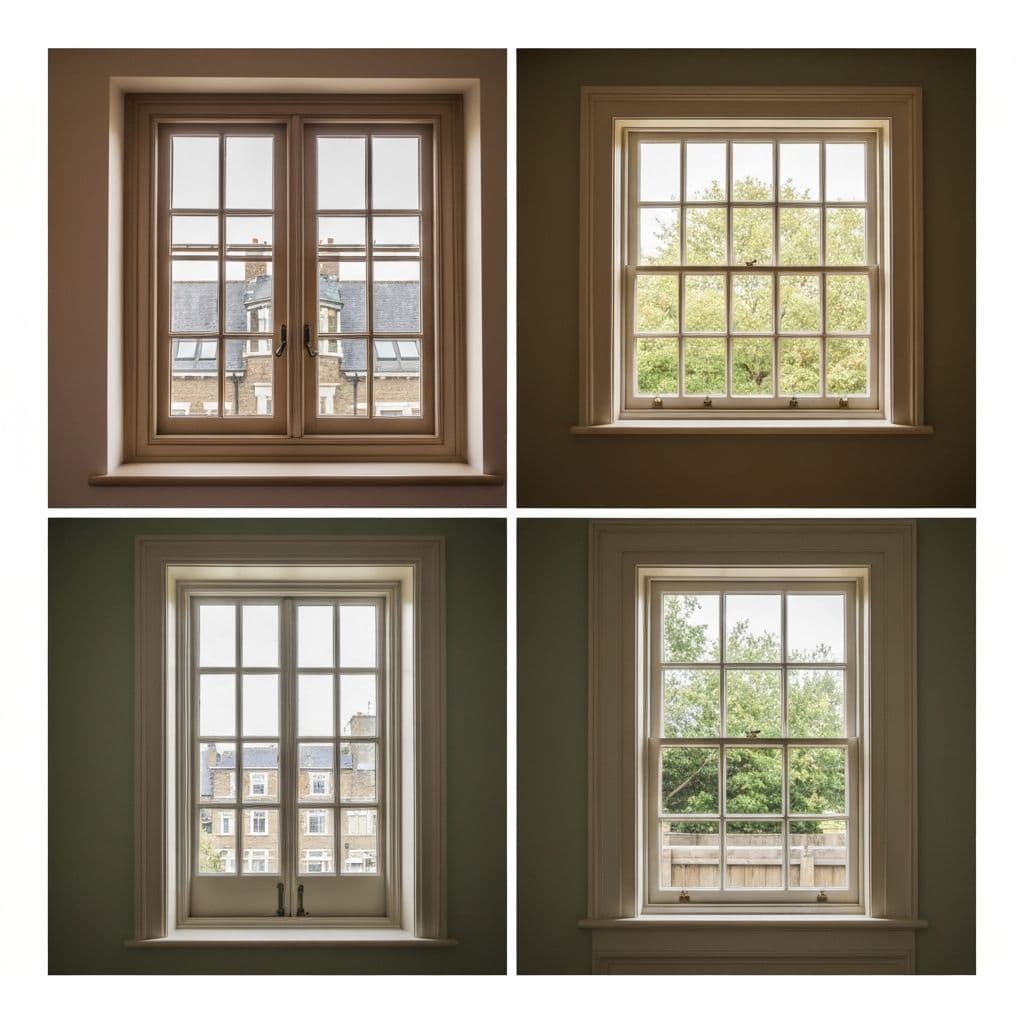
If your property is a listed building, you likely cannot change your original windows. This makes secondary glazing your only viable path to comfort.
Not sure your road justifies the heaviest glass? Our street-by-street guide asks whether 10.8mm acoustic laminate is overkill for your home.
Our advice is usually this:
- If you’re on a quiet residential road, 6mm toughened is the “sweet spot” for value and performance.
- If you’re near a bus stop, a train line, or a late-night venue, 6.4mm acoustic laminate is an investment in your mental health and property value. It is a “bespoke” upgrade that provides aesthetic longevity and genuine peace.
However, we must be transparent: if your existing window frames are rotting or structurally unsound, no amount of acoustic glass will save them. Secondary glazing is a surgical strike for sound and heat, but it requires a solid foundation to work its magic.
When 4mm or 6mm Toughened Glass Is Enough
If you live on a quiet side street with minimal traffic, 4mm or 6mm toughened glass may be perfectly sensible.
This is often enough when:
- The road is mainly residential.
- Traffic is occasional rather than constant.
- You are not dealing with buses or heavy vehicles.
- Your main complaint is draughts and cold, with noise a secondary concern.
- You want a noticeable improvement without specifying a high-performance acoustic package.
A second pane of glass, properly sealed and fitted inside the existing window, can make a surprisingly large difference. It reduces cold air movement, makes the inner surface feel warmer and softens everyday sounds such as voices, light traffic and garden noise.
For many quieter period homes, the biggest improvement comes from adding a separate inner window at all. You do not necessarily need the heaviest glass in the catalogue.
That is particularly true where the original timber window is in reasonable condition and the room is not directly exposed to a noisy road.
When 6.4mm or 6.8mm Acoustic Laminate Hits the Sweet Spot
For many London homes, 6.4mm or 6.8mm acoustic laminate is the sensible middle ground.
This is usually worth considering if you have:
- Moderate residential traffic.
- Occasional buses or delivery vehicles.
- A road-facing bedroom that is annoying rather than unbearable.
- Some sirens, voices or evening activity.
- A home office where concentration matters.
- A period property where you want stronger acoustic performance without going straight to the highest specification.
This is often where the “do I actually need 10.8mm?” answer becomes: probably not.
Acoustic laminate in this range is designed to deal with more than simple background noise. It helps reduce the sharper edge of traffic and the general wash of a busy London street, while also improving thermal comfort.
You may still hear a bus go past. The aim is to make it sound like a bus going past, rather than a bus parking in your sitting room.
For a typical Victorian terrace on a moderately busy road, this can be a very good balance between performance, appearance and cost. If the front elevation is noisier than the rear, it is also perfectly reasonable to use a higher specification at the front and a simpler one elsewhere.
A good sound insulation survey should look at each elevation rather than applying one specification to every window.
When 10.8mm Is Genuinely Justified
10.8mm acoustic laminate earns its keep when the noise is persistent, intrusive and often low-pitched.
It is more likely to be justified if you live:
- On a main road or bus route.
- Beside a busy junction.
- Near a railway, Tube line or Overground route.
- Under a regular flight path.
- Above or beside a pub, club or late-night venue.
- In a terrace where the windows sit very close to passing traffic.
- In a bedroom where noise is disturbing sleep.
- In a home office where rumble and vibration are making it difficult to work.
The important word here is low-pitched. A heavy bus, lorry or train creates a deep rumble that can travel through ordinary glass and frames. Thicker acoustic laminate adds useful mass and damping, but it works best as part of a properly designed system. (For the full case in its favour, read why 10.8mm acoustic laminate is the gold standard.)
It is not magic glass. It will not remove every sound from a London street. It can, however, take the intrusive thump and roar out of the noise, leaving something far easier to live with.
If your property faces a main road and you are still waking when the first buses start, 10.8mm may be entirely reasonable. If your loudest neighbour is a determined pigeon, it is probably a little enthusiastic.
A Simple Specification Guide
Here is the short version:
- Quiet side street: 4mm or 6mm toughened glass may be enough.
- Moderate residential traffic: 6.4mm or 6.8mm acoustic laminate is often the sweet spot.
- Main road, bus route or persistent low-frequency noise: consider 10.8mm acoustic laminate.
- Tube, Overground, railway, flight path or late-night venue: 10.8mm becomes more justifiable, with the widest practical air gap.
- Rotten or badly draughty frame: repair the original window before deciding on the glass.
- Mixed home: use different specifications for different elevations and rooms.
If you are researching heritage window secondary glazing, do not begin with the thickest glass. Begin with the noise source, the reveal depth and the condition of the original window.
That approach avoids spending money where it will not improve your life. You can read more about secondary glazing for listed buildings, or see the options available for sash windows.
Quiet Residential Crescents: Richmond, Dulwich and Leafy Side Streets
If your home faces a quiet crescent in Richmond, Dulwich or a similar residential pocket, you probably do not need the heaviest glass available.
Your main disturbances may be occasional cars, delivery vans, birds, neighbours and the odd enthusiastic motorbike. In this situation, 4mm or 6mm toughened glass can be perfectly sensible.
A Practical Starting Point
- Glass: 4mm toughened for a lighter-touch upgrade, or 6mm toughened for a little more mass
- Air gap: Around 100mm where possible
- Best for: General background noise, draught reduction and improved warmth
The thermal improvement can be just as valuable as the acoustic benefit. The original single-glazed pane is often cold to the touch, while the new inner pane creates an insulating buffer. Rooms feel less chilly near the window, and you are less likely to find condensation making itself comfortable on the glass.
If the front of your house is quiet but the rear faces a railway, pub garden or busy road, do not specify every window in the same way. Period homes often need a room-by-room approach.

Red Routes and Busy Arterial Roads: Kensington, Wandsworth and Central London
Kensington High Street, Cromwell Road and Wandsworth Bridge Road create a more demanding mix of noise. There is the constant road roar, but also buses, HGVs, braking, acceleration, sirens and the occasional vibrating manhole cover. London does like to keep things interesting.
For these locations, I would usually look at 6.4mm or 6.8mm acoustic laminated glass rather than standard toughened glass.
Acoustic laminate contains an interlayer designed to damp vibration. It does not simply make the glass heavier; it helps stop the pane from behaving like a giant drum skin when traffic passes.
A Practical Starting Point
- Glass: 6.4mm or 6.8mm acoustic laminate
- Air gap: Ideally around 100mm to 150mm
- Best for: Traffic roar, buses, sirens and busy road junctions
The installation must also be carefully sealed, especially around bay windows and uneven period reveals. A perfect pane with a leaky perimeter is a bit like buying a very good umbrella with a hole in it.
For a listed townhouse or conservation-area property, this internal approach has another major advantage: the original external window remains in place. You improve comfort without changing the street-facing appearance.
Above or Near the Tube and Overground: Camden, Islington and Hackney
Rail and Underground noise can be especially stubborn because it is not just airborne sound. You may hear a rumble, but you may also feel a faint vibration through the building. This low-frequency disturbance behaves differently from ordinary traffic noise.
In homes across Camden, Islington and Hackney, the widest practical air gap is often more important than choosing a slightly different mid-range glass. I would normally consider a heavier acoustic laminated pane, potentially 8mm to 10.8mm, combined with a substantial cavity.
A Practical Starting Point
- Glass: Heavy acoustic laminate, often 8mm to 10.8mm depending on the survey
- Air gap: The widest practical gap, commonly 120mm to 150mm or more where suitable
- Best for: Tube rumble, Overground trains and low-frequency vibration
There is an important caveat here. Window glazing can reduce the airborne part of railway noise very effectively, but it cannot cure every structural vibration travelling through walls, floors or foundations. If your ornaments rattle when a train passes, the window may not be the only route the sound is taking.
This is exactly why a survey matters. The right specification for a bedroom facing the tracks may be different from the right specification for a rear room several metres away.
For more detail, see our guide to noise reduction glazing.
Under a Flight Path: Hammersmith & Fulham, Hounslow and Richmond
Aircraft noise has its own personality. It can be a broad, heavy roar that arrives suddenly, rises quickly and then fades away. It is not the same as the repetitive vibration of trains or the closer, sharper sound of traffic.
Homes under flight paths in Hammersmith & Fulham, Hounslow and Richmond often benefit from a heavy laminated pane and the largest suitable air gap. The aim is to reduce the sudden peaks that interrupt sleep, conversation and concentration.
A Practical Starting Point
- Glass: Heavy acoustic laminate, commonly 8mm to 10.8mm depending on the room
- Air gap: Around 120mm to 150mm where the reveal allows it
- Best for: Aircraft overflights and intermittent broadband noise
The shape and condition of the existing window matter here. A loose sash, cracked putty or draughty meeting rail can undermine the result. It is worth repairing obvious defects before or as part of the installation.
Acoustic performance and thermal performance also overlap nicely in this situation. A well-sealed inner window does not just soften aircraft noise; it reduces cold draughts and helps keep heated air inside. Your boiler may not send a thank-you card, but it will have less work to do.
Next to a Pub, Club or Late-Night Venue: Westminster and Shoreditch
Night-time venue noise is usually a mixed bag: voices, laughter, doors slamming, music, bass and people deciding that the pavement is an excellent place for a 2am group discussion.
Speech and music are mostly airborne noise, but bass can be low-frequency and surprisingly persistent. Whether you are in Westminster or Shoreditch, the air gap and airtight seals are crucial.
A Practical Starting Point
- Glass: 6.4mm acoustic laminate for many situations, with heavier laminate considered for strong bass
- Air gap: Around 100mm to 150mm where possible
- Best for: Voices, music, late-night street noise and mixed urban disturbance
If the main problem is sound entering through a window, internal secondary glazing can make a substantial difference. But it cannot stop every noise source. Open doors, extractor vents, party walls and roof structures may also transmit sound.
A survey helps identify whether the window is genuinely the weak point before you spend money treating it.

My Quick London Comparison
| Local situation | Typical starting point | Main priority |
|---|---|---|
| Quiet crescent in Richmond or Dulwich | 4mm or 6mm toughened | Thermal comfort and general noise |
| Red route in Kensington or Wandsworth | 6.4mm or 6.8mm acoustic laminate | Traffic and bus noise |
| Tube or Overground near Camden, Islington or Hackney | Heavy acoustic laminate | Wide air gap and low-frequency control |
| Flight path in Hammersmith, Hounslow or Richmond | 8mm to 10.8mm acoustic laminate | Heavy, intermittent aircraft noise |
| Pub, club or venue in Westminster or Shoreditch | 6.4mm laminate or heavier | Speech, music and bass |
These are starting points, not a substitute for measuring the property. For the physics behind each option, see what thickness of acoustic glass you need.
Frequently Asked Questions
Is thicker glass always better for noise reduction?
No. Thickness helps, but the air gap, seals, frame design and existing window all matter. A well-installed moderate specification can outperform a heavy pane fitted into a poorly sealed system.
What is the best glass for a busy London road?
For many busy arterial roads, 6.4mm or 6.8mm acoustic laminate is a sensible starting point, paired with a 100mm to 150mm air gap. The final choice depends on the road, room and window.
Can secondary glazing reduce Tube vibration?
It can reduce the airborne sound from trains and improve the overall experience, but it cannot eliminate structural vibration travelling through the building. A survey should identify how much of the problem is coming through the window.
Can I use secondary glazing in a listed building?
Internal secondary glazing is often the most conservation-friendly option because it leaves the original external window intact and is reversible. You should still check the position with your local authority or conservation officer.
Is acoustic glass also useful for warmth?
Yes. The second pane and sealed air gap reduce heat loss and draughts as well as noise. The thermal improvement is often an important part of the decision, especially in rooms with large original sash windows.
Should I install the same glass throughout my home?
Not necessarily. A front bedroom facing a red route may need a heavier specification than a quiet rear study. Room-by-room recommendations are usually more sensible, and less expensive, than treating every window identically.
Reclaim Your Sanctuary
Choosing the right glass is about more than just numbers on a datasheet; it’s about being able to hear yourself think. Whether you need the discreet protection of 4mm glass or the heavy-duty silence of 6.4mm acoustic laminate, we are here to help you navigate the options.
Ready to protect your home from the noise of the outside world? Get an instant quote or speak with one of our specialists today.

Sources & References
The information in this article is supported by the following sources. We strive to provide accurate, well-researched content for our readers.
- 1Standard
BS EN ISO 717-1 Acoustics — Rating of sound insulation in buildings. British Standards Institution (2020).
- 2Government
Energy Efficiency and Historic Buildings: Secondary Glazing for Windows. Historic England (2016).