Bay Window Secondary Glazing: Special Considerations for Period Properties
Penny Hargreaves
Heritage Acoustics Writer

Bay windows are one of the defining features of Victorian and Edwardian London. Whether canted (angled), curved, or square, they flood rooms with light, create architectural interest, and have graced the capital's terraces for over 150 years. They also present particular challenges for secondary glazing.
Here's our specialist guide to protecting and improving London's bay windows.
Types of Bay Windows
Canted Bays
The most common type in Victorian terraces—three flat windows arranged at angles (typically 45° or 30°). The side windows return to the main wall at an angle.
Secondary glazing approach: Three separate units following the same angles, or a single faceted unit spanning the entire bay.
Square Bays
Three windows at right angles—a flat front with two 90° returns. Common in later Victorian and Edwardian properties.
Secondary glazing approach: Three independent units, or an integrated corner-return system.
Curved Bays (Bow Windows)
A continuous curve, sometimes with multiple small panes, sometimes with large curved glass. Most commonly found in Georgian and Regency properties.
Secondary glazing approach: Curved secondary glazing is possible but requires bespoke manufacturing. Faceted approximation is an alternative.
Installation Approaches
Option 1: Individual Units Per Window
Each window within the bay receives its own secondary glazing unit, mounted to the individual reveals.
Advantages:
- Simpler installation
- Each unit can be opened independently
- Easier to clean behind
- Lower cost
Disadvantages:
- Gaps at corner junctions may allow some sound flanking
- Visible frame edges at each unit boundary
- Slightly lower acoustic performance
Option 2: Continuous Faceted Unit
A single secondary glazing system spans the entire bay, with glazed panels joined at the angles.
Advantages:
- Superior acoustic performance—no gaps
- Cleaner appearance
- Better thermal performance
Disadvantages:
- More complex installation
- All panels must open together (or remain fixed)
- Higher cost
- More difficult to clean original windows
Option 3: Hybrid Approach
Side panels as separate units, centre panel independent. Allows opening of side windows for ventilation while maintaining sealed centre.
This often provides the best balance of performance and practicality for typical Victorian bays.
The Corner Detail
The critical challenge for bay window secondary glazing is the corner junction. Options include:
Corner Post
A vertical aluminium post at each corner angle, with glazed panels either side. Creates a clean junction but adds visible framework.
Direct Glass-to-Glass
Glazed panels butted together at the angle with silicone seal. Minimal framework but requires precise manufacturing and careful sealing.
Overlapping Panels
One panel slightly overlaps the adjacent panel at corners. Simple but creates visible step and potential acoustic weak point.
Curved Bay Solutions
True curved secondary glazing requires glass bent to match your bay's radius. This is:
- Possible for radius of 500mm or greater
- Expensive (curved glass costs 3-4× flat glass)
- Limited in thickness (typically max 6mm)
- Beautiful when executed well
For tighter curves or budget constraints, a faceted approximation using multiple flat panels can achieve excellent results at lower cost. With slim frames and careful angle matching, the faceting is barely noticeable.
Opening Mechanisms for Bay Windows
Hinged Casements
Side-hung panels that swing inward. Works well for individual units but awkward for large centre panels. Good for ventilation and cleaning access.
Vertical Sliding
Matches the operation of original sash windows. Excellent for maintaining consistency of operation across your windows. Slightly more complex for angled bays.
Horizontal Sliding
Panels slide sideways behind each other. Works well in bays where vertical operation is impractical. Allows large openings with panels stacked.
Lift-Out Panels
Fixed panels that can be removed entirely for cleaning or summer. Lower cost, maximum acoustic performance, but requires storage for panels when removed.
Acoustic Performance in Bay Windows
Bay windows are often noisier than flat windows because:
- Greater glass area captures more sound
- Angles may focus sound into the room
- Multiple frame junctions create potential weak points
- Corner sealing is challenging
With properly specified secondary glazing, bay windows can achieve the same 45-54dB reduction as flat windows—but corner details must be carefully resolved.
Thermal Benefits
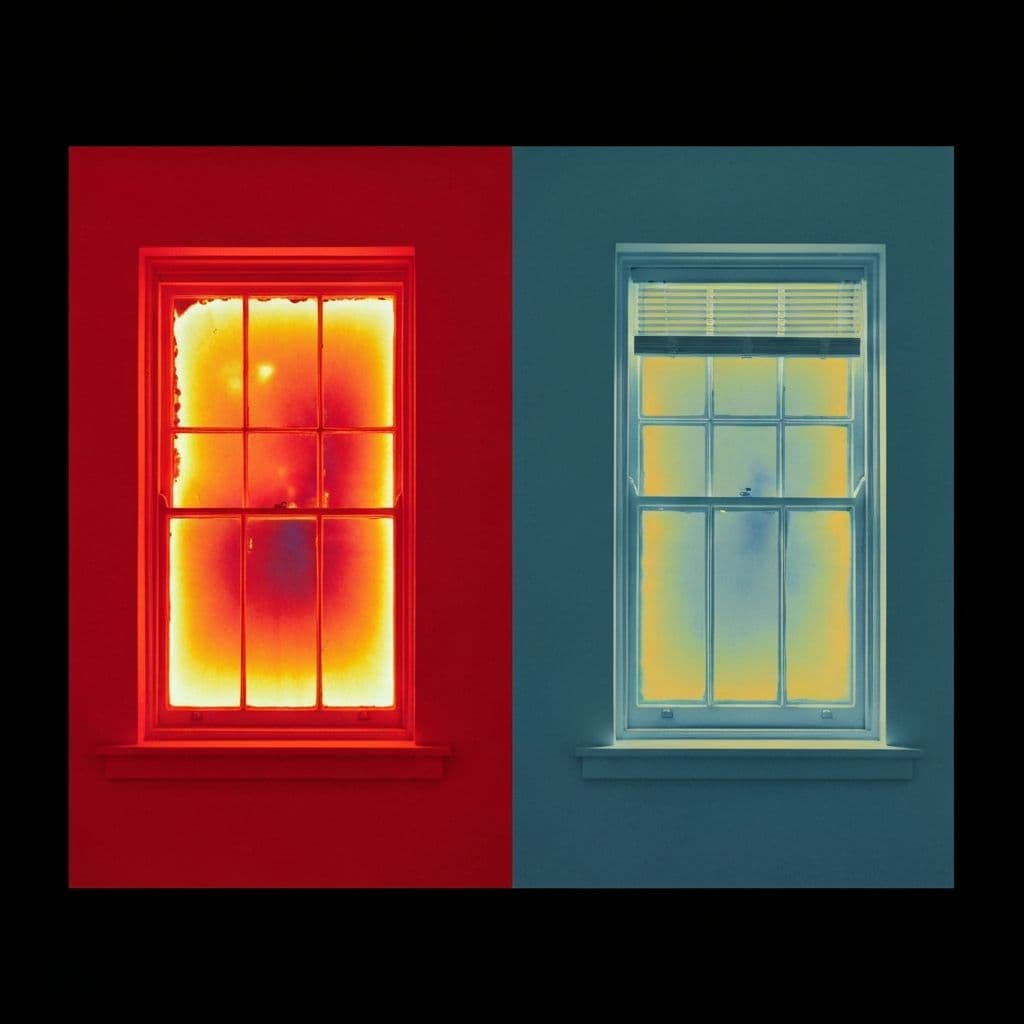
Bay windows are also thermal weak points because:
- Exposed on three sides rather than one
- Often sit proud of the main wall insulation line
- May have uninsulated bay roof/floor
Secondary glazing dramatically improves bay window thermal performance. Combined with attention to the bay roof (if accessible) and any floor voids, the improvement in room comfort is substantial.
Heritage Considerations
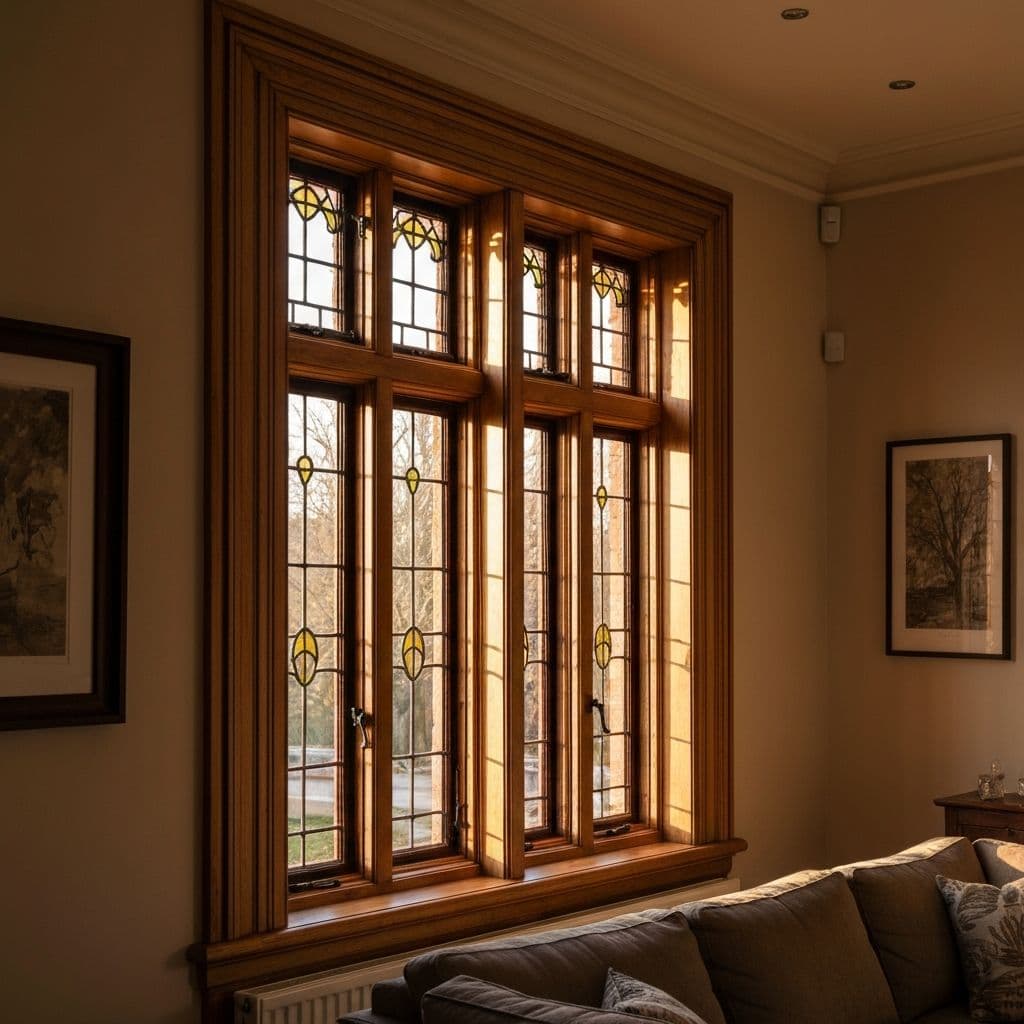
Bay windows are often architecturally significant. In listed buildings and conservation areas:
- Original windows must be preserved exactly
- Secondary glazing should be invisible from outside
- Frame colours should complement interior décor
- Opening mechanisms should not obstruct original window operation
With recessed installation and slim profiles, secondary glazing in bay windows is typically undetectable from the street.
Costs for Bay Windows
Bay window secondary glazing costs more than flat windows due to complexity:
- 3-panel canted bay (individual units): £1,200-£2,000
- 3-panel canted bay (faceted continuous): £1,800-£2,800
- Large square bay: £1,500-£2,500
- Curved bow window: £2,500-£4,500
These prices assume standard acoustic specification. Premium glass specifications (10.8mm acoustic laminate) add approximately 30%.
Survey Importance
Bay windows require precise measurement and careful design. We survey:
- Exact angles of each return
- Reveal depths at multiple points
- Any out-of-square conditions
- Clearance for opening mechanisms
- Interaction with curtains, blinds, and shutters
This ensures your secondary glazing fits perfectly and operates properly.
Book a Survey
If you have bay windows that need acoustic or thermal improvement, request a survey. We'll assess your specific bay configuration and recommend the optimal approach.
Call 020 7060 1572 to discuss your bay window project.