How Long Does Secondary Glazing Last? Lifespan and Maintenance
Marcus Webb
Installation Director
Secondary glazing is a long-term investment, so it is reasonable to ask how long it will last and what looking after it involves. The good news: quality secondary glazing is remarkably durable and needs very little maintenance.
Typical Lifespan
Well-made, professionally installed secondary glazing typically lasts 20 years or more. The aluminium frames we use do not rot, warp, or corrode, and toughened or laminated glass remains stable for decades.
In practice, many systems outlast that comfortably—the main parts that may need occasional attention are the moving components, not the glass or frame.
What Affects Lifespan
1. Build Quality
Cheap, flimsy systems with thin frames and basic seals wear out faster. Robust aluminium frames and quality brush seals last far longer—one reason professional installation outperforms DIY over time.
2. Operation Type
Fixed and lift-out panels have no moving parts, so they essentially last as long as the materials. Sliding and hinged units have rollers, hinges, and catches that may need occasional adjustment or replacement—simple, inexpensive jobs.
3. Environment
Coastal salt air or heavy condensation can shorten the life of lesser products, but quality aluminium handles these conditions well.
Maintenance: What's Actually Involved
Maintenance is genuinely minimal:
Cleaning (occasional)
- Wipe the glass with standard glass cleaner when needed
- Open the unit periodically to clean between the panes
- Vacuum dust from the tracks of sliding units
Brush Seals (every several years)
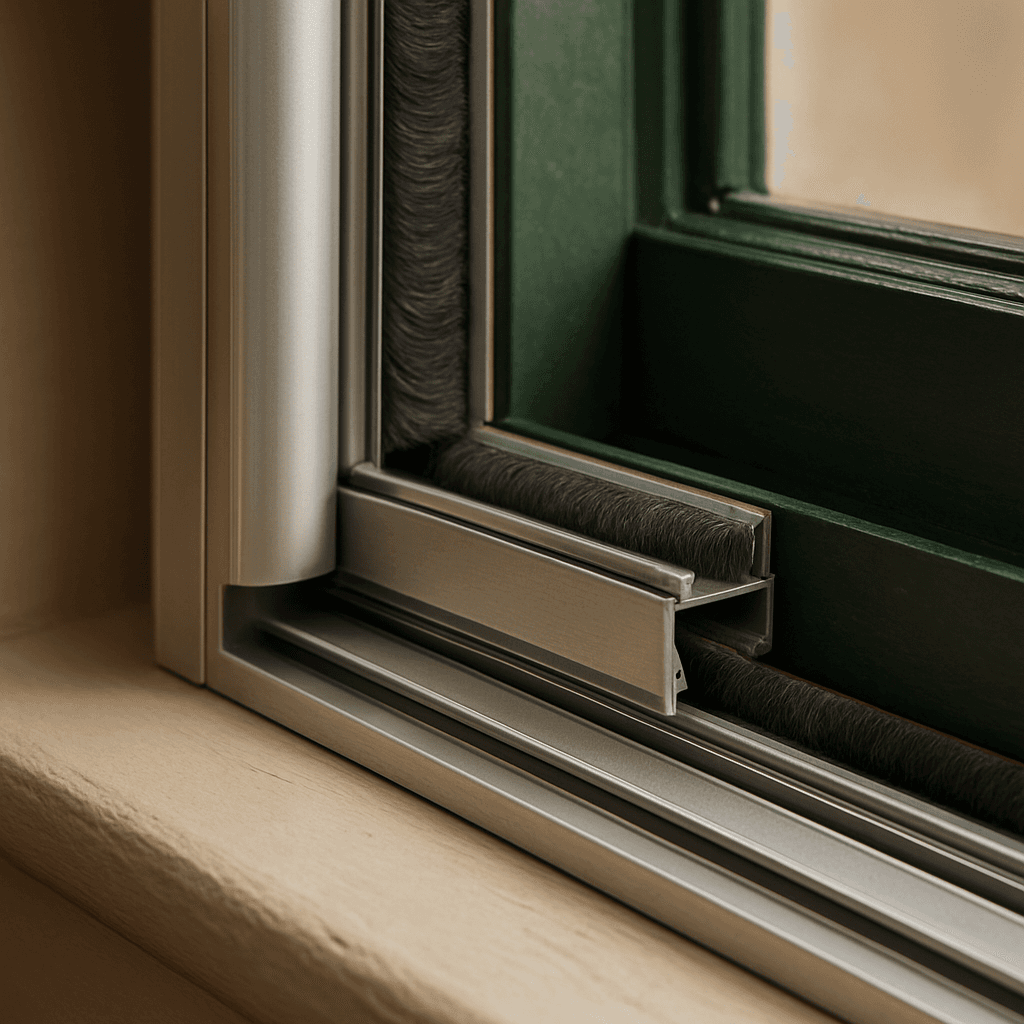
The brush seals that block draughts and noise can be replaced if they wear—a cheap, quick task that restores full performance.
Moving Parts (as needed)
Rollers on sliders and hinges on casements may need a little lubricant or occasional adjustment to keep operation smooth.
Does Performance Degrade Over Time?
The core acoustic and thermal performance comes from the glass and the air gap, which do not degrade. As long as the seals are intact, your acoustic performance stays consistent year after year. This stability is a key advantage over sealed double-glazing units, which can fail and mist up internally.
Lifespan by Component
It helps to think of secondary glazing as a set of parts with different lifespans, rather than one product that either works or fails:
- Glass: Lasts indefinitely unless broken. Laminated acoustic glass does not lose its sound-damping interlayer with age.
- Aluminium frames: Several decades. Powder-coated finishes may fade slightly in strong sun but do not affect performance.
- Brush and compression seals: The part most likely to need renewing, typically after many years of daily use. Replacement is quick and inexpensive.
- Rollers, hinges and catches: Long-lived on lightly used windows. On a slider opened several times a day, expect an adjustment or a replacement roller at some point.
- Balances on vertical sliders: The spring balances that hold a vertical slider in position can weaken over a long period and are straightforward to swap.
Signs Your Secondary Glazing Needs Attention
None of these mean the system has failed. They mean a small part needs looking at:
- A draught or more noise than before: Usually a flattened or dislodged seal.
- A slider that sticks or drops: Dirt in the track, or a worn roller or balance.
- A hinged unit that catches on the frame: The hinge needs a small adjustment.
- Condensation between the panes: Often ventilation rather than the glazing itself. Our guide to condensation on period windows explains the causes.
A Simple Yearly Routine
Ten minutes per window once a year is enough for most homes:
- Open the secondary unit and clean both faces of the glass with a soft cloth.
- Vacuum the tracks, then wipe them with a damp cloth. Grit is the main cause of wear on rollers.
- Run a finger along the seals. Replace any section that is flattened, torn or missing.
- Open and close each unit fully to check it runs smoothly and locks properly.
- Check the primary window behind. Peeling paint or soft timber on the sill should be dealt with early.
Avoid abrasive pads, solvent cleaners and oil-based lubricants on the tracks, which attract dirt. A dry silicone spray is best for moving parts.
Secondary Glazing vs Double Glazing Lifespan
Sealed double-glazed units have a weakness secondary glazing does not: the edge seal between the two panes. When it fails, moisture gets in, the unit mists up and the whole glass unit has to be replaced. Secondary glazing has no sealed unit, so there is nothing to mist up, and every wearing part can be replaced individually. That is a large part of why it is a durable choice for period and listed homes, where you want an upgrade that will last as long as the original windows behind it.
Protecting Your Investment
- Choose quality materials and professional installation from the start
- Keep tracks and seals clean
- Address any stiff operation early before it causes wear
Built to Last
Our secondary glazing is engineered for decades of reliable service in demanding London homes, from Islington townhouses to Chelsea mansion flats. Request a free survey or call 020 7060 1572 to discuss a system built to last.