Victorian Sash Window Draughts: Causes and Solutions for Cold Homes
Penny Hargreaves
Heritage Acoustics Writer

There's a particular kind of cold that Victorian homeowners know intimately: the icy finger of air that creeps through your beautiful sash windows on a winter evening, making your curtains billow gently while your heating bill climbs ever higher.
Victorian sash windows are architectural treasures—elegant, proportioned, and built with craftsmanship that modern windows rarely match. But they were designed for a world of coal fires and servants, not central heating and energy efficiency. Understanding why they're draughty is the first step to fixing them without destroying their character.
Why Victorian Sash Windows Are Draughty
Sash windows operate on a simple principle: two frames (sashes) slide vertically past each other, counterbalanced by weights hidden in the frame. This elegant mechanism has a fundamental flaw—the sashes must have clearance to move, and that clearance lets air through.
The Five Sources of Draughts
- The meeting rail: Where the top and bottom sashes meet in the middle, there's a gap. Over time, as timber shrinks and warps, this gap widens.
- The sash edges: Both sashes run in channels (the "staff bead" and "parting bead"). Clearance for movement means gaps for air.
- The sash-to-glass junction: Victorian glazing used linseed oil putty, which shrinks and cracks over 100+ years, creating gaps between glass and timber.
- The sill: The bottom rail of the lower sash rarely sits perfectly against the sill, especially after decades of paint layers and timber movement.
- The frame-to-wall junction: Settlement, lime mortar deterioration, and thermal movement can open gaps between the window frame and the masonry.
The Traditional Fixes (And Their Limitations)
Draught-Proofing Strips
The most common DIY solution is adding brush or rubber strips to the sash channels and meeting rails. This can reduce draughts by 50-70% and costs £100-£300 per window professionally installed.
Limitations: Strips wear out and need replacing every 5-10 years. They don't address the fundamental single-glazing heat loss. Some strips make sashes harder to operate.
Putty Renewal
Re-puttying the glazing can seal air leaks around the glass. This is good maintenance practice regardless of other measures.
Limitations: Only addresses one of the five draught sources. Labour-intensive and requires skill to match heritage appearance.
Overhauling and Rebalancing
A full sash window overhaul involves removing the sashes, repairing timber, replacing sash cords, adjusting weights, and reinstalling with tighter tolerances.
Limitations: Expensive (£500-£1,000+ per window). Addresses draughts but not thermal performance of single glazing. Gaps will return over time as timber moves seasonally.
The Comprehensive Solution: Secondary Glazing
Here's the approach we recommend for Victorian properties where draughts are a serious problem: combine basic draught-proofing with internal secondary glazing.
Why This Works
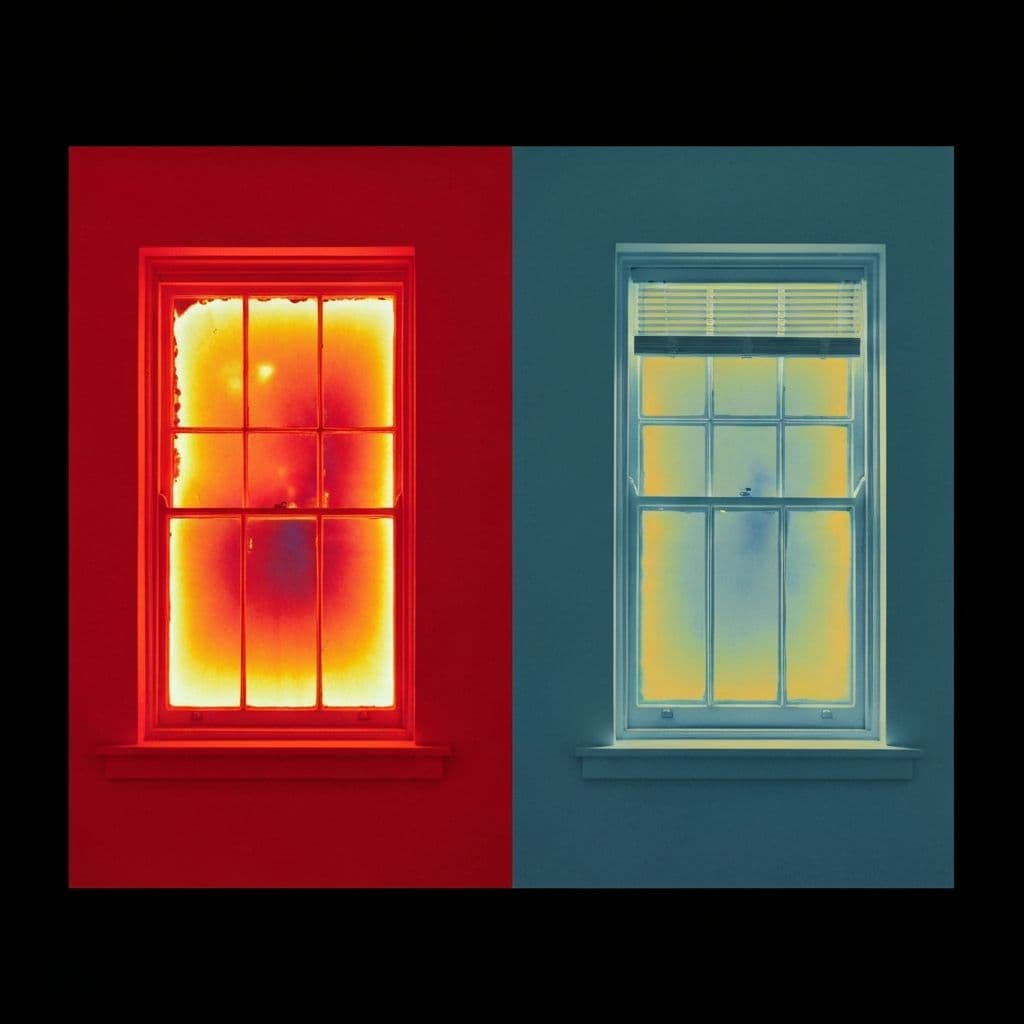
Secondary glazing creates a completely separate barrier on the inside of your window reveal. Unlike draught strips that try to seal moving parts, secondary glazing forms an airtight seal against the fixed reveal—there are no moving joints to leak.
The benefits stack:
- Draughts eliminated: The sealed secondary unit stops all air movement, regardless of the original window's condition
- Thermal performance transformed: The large air gap (100mm+) acts as insulation, reducing heat loss by up to 65%
- Condensation prevented: The inner pane stays close to room temperature, stopping the condensation that rots Victorian timber
- Original windows preserved: No modification to your historic sashes required
Secondary Glazing Options for Sash Windows
Vertical sliding units: The most popular choice. The secondary glazing operates exactly like your original sash—two panes sliding vertically. Meeting rails can be aligned with the original for a seamless appearance.
Hinged casements: Side-hung or top-hung panels that swing open for cleaning and ventilation. Simpler mechanism but different aesthetic to original sashes.
Lift-out panels: Fixed panels that can be removed entirely for summer. Lowest cost but least convenient for ventilation.
Horizontal sliders: Two panes sliding horizontally. Works well for wide windows where vertical operation would be awkward.
What About the Look?
This is the most common concern from period property owners, and it's valid. Poor-quality secondary glazing can look awful—thick plastic frames, misaligned sight lines, and obvious "box-in" appearance.
High-quality heritage secondary glazing is different:
- Slim aluminium frames: 20-25mm profiles that virtually disappear
- Colour matching: RAL-matched to your interior décor or existing woodwork
- Aligned meeting rails: Secondary unit rails positioned to match original sash divisions
- Recessed installation: Units fitted within the reveal, not projecting into the room
When installed correctly, many visitors don't notice secondary glazing is present at all.
Installation in Listed Buildings
Because secondary glazing is installed internally and doesn't alter the original windows, it typically doesn't require Listed Building Consent. This makes it the only practical option for upgrading windows in Grade I and Grade II listed properties.
For properties in Islington, Hampstead, and other conservation areas, secondary glazing preserves the external appearance that planning regulations protect.
Cost Considerations
For a typical Victorian terrace with 8-10 sash windows:
- Draught-proofing only: £1,500-£3,000
- Secondary glazing (standard): £3,000-£5,000
- Secondary glazing (heritage specification): £5,000-£8,000
- Combination approach: £6,000-£10,000
This investment typically pays back within 5-8 years through reduced heating costs, while also increasing property value and comfort immediately.
Taking Action
Victorian sash windows deserve preservation—they're part of London's architectural heritage and often more beautiful than any modern replacement. But that doesn't mean living with draughts and high heating bills.
The combination of sympathetic draught-proofing and quality secondary glazing gives you the best of both worlds: original character preserved, modern comfort achieved.
Request a free survey to discuss the best approach for your Victorian windows, or call 020 7060 1572 to speak with a heritage glazing specialist.